

-p-1080.jpg)

Picture this: A new outbreak is spreading, suspected to be another wave of the SARS-CoV-2 strain. You’re a health worker, tasked with extracting metadata from several dense narrative outbreak reports.
On 24 August, the OpenUp team led a virtual outbreak simulation workshop, joined by Dr Dominique Anderson, metadata quality lead at the South African National Biodiversity Institute (SANBI), along with several other data experts from across the continent. The workshop featured a presentation by Dr Anderson on genomic data, demonstrations of several outbreak and environmental data dashboards, as well as practical breakout room activities based on the scenario described above.
According to Dr Anderson, genomics can tell you what a pathogen is, but metadata paints a broader picture, including crucial details regarding the location, timeline, source and cause of an outbreak. Without metadata, a genome is "technically perfect but epidemiologically useless”.
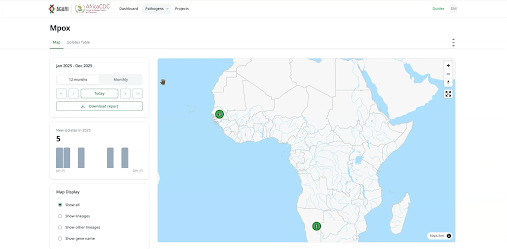
This is why platforms like the Africa Centres for Disease Control and Preventions’ African Genomic Archive for Response & Insight (AGARI), co-developed with OpenUp, can play a crucial role in allowing African laboratories to share genomic and metadata information across countries. Built specifically with low and middle income contexts in mind, AGARI enables real-time surveillance to strengthen timely responses to disease threats across Africa.
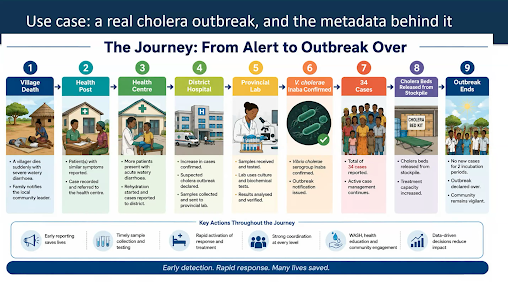
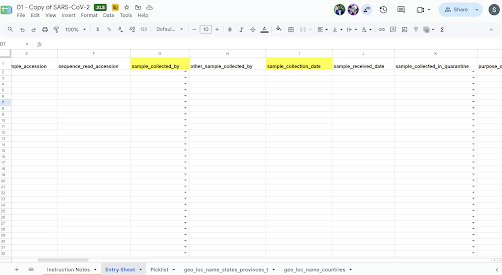
Workshop attendees participated in a mock outbreak exercise, where they were supplied with real, anonymised narrative outbreak reports, from which they had to extract key metadata points, including reporting facilities, patient IDs, symptoms and more. These data points were filled into a metadata template, complete with drop-down menus and controlled pick lists. Participants discussed the importance of erring on the side of caution when completing templates by sticking to the correct terminology and clearly noting when they are unsure about a particular point, rather than picking the next best or closest option.
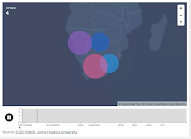
In the second phase of the activity, the participants used outbreak data provided by a pathogen dummy-data generator, also developed by OpenUp, to create a creative variety of interactive and static data visualisations. Visualisations included choropleths, dashboards, bubble maps, time sliders and infographics, put together using Flourish, a visualisation tool, and Claude, a large language model (LLM).
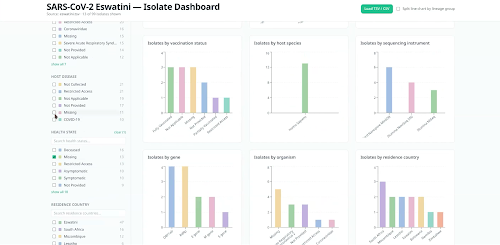
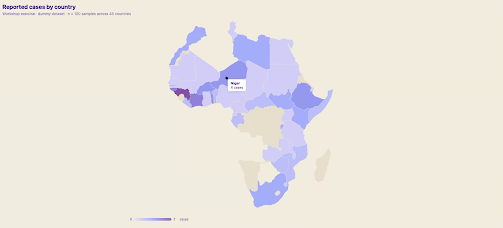
By the end of the workshop, attendees noted the importance of metadata work, especially in emergency situations, and how tools like AGARI and GIBSON, a dashboard built to access NASA Worldview's GIBS satellite imagery layers directly, could contribute to their work.
The core lesson? Good metadata is absolutely vital in tracking the spread of disease and maintaining public health. If you work in epidemiology, genome metadata extraction or environmental data in general, keep an eye out for similar workshops that we hope to host in the future.
.png)
%20(21).jpg)
%20(7).jpg)
%20(2).jpg)
