
-p-1080.jpg)

After six years, the Africa Data Hub (ADH) project is winding up, and leaving behind many lessons learned about how civic tech organisations, like OpenUp, can support journalists, academics and activists in a world where data availability and the tools to analyse it are changing fast. When the project began, we were wrestling with the lack of continentally sourced data around COVID-19 that was in the public domain. As we wrap up, large language models are making data work both easier and riskier than ever.
A lot, in other words, has changed.
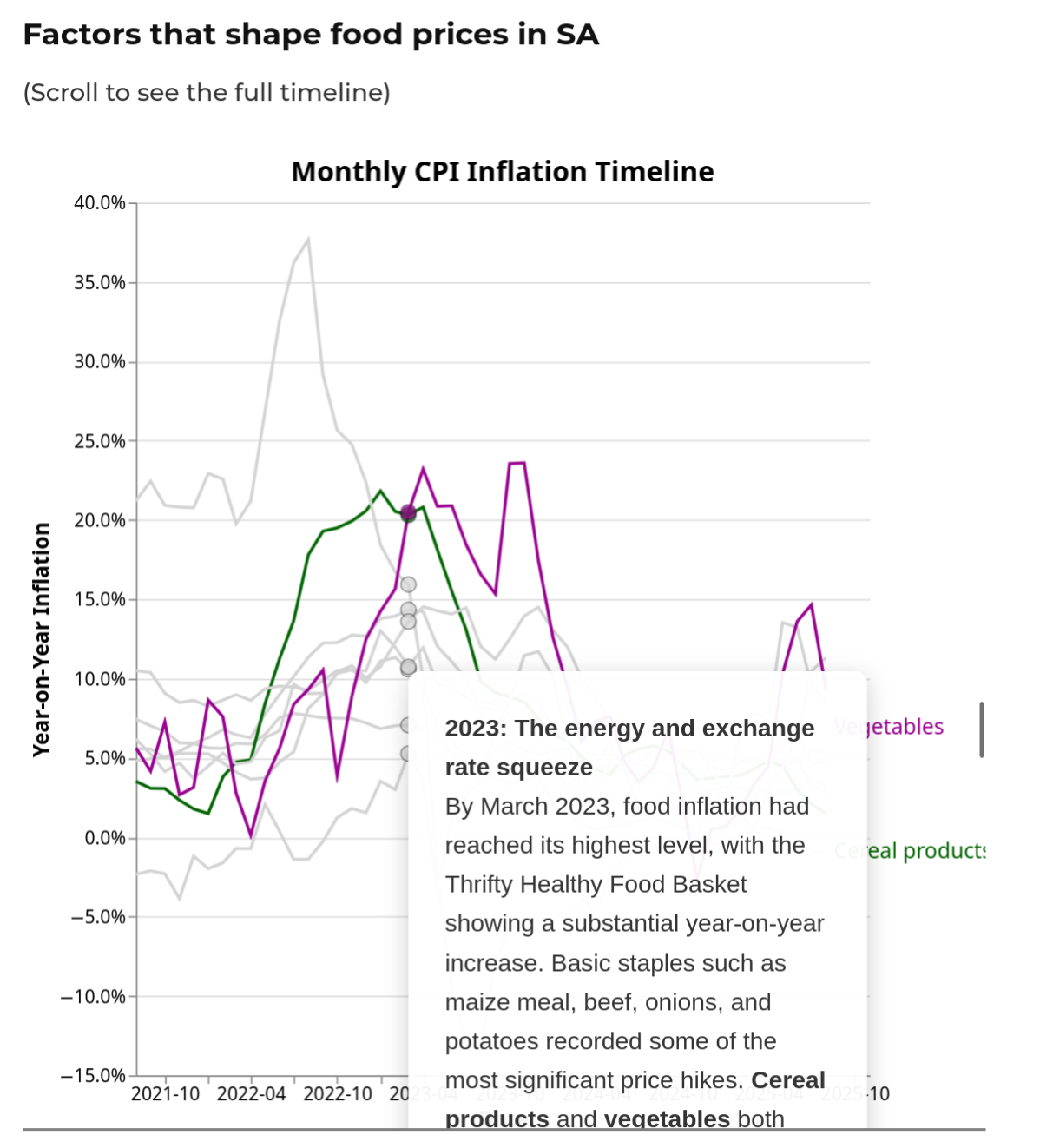
The work that OpenUp has been doing as a key partner for ADH has seen many successes. We’ve built world-first tools for monitoring consumer price inflation (CPI) in Africa, to keep track of increases in the cost of living brought on by global economic shocks - wars, droughts, pandemics - that have occurred in a short space of time. We’ve trained dozens of journalists in the use of data for investigation and storytelling, and we’ve supported them in producing stories that combine complex data with interactive design and engaging charts. I’m particularly proud of our own venture into storytelling, with a longform interactive that explains the concept of “climate debt” owed to Africa.
Some of our best work has been exploring how to make satellite imagery more accessible for the media, through a variety of tools, workshops and stories.
Not everything has been a success. Africa Data Hub provided us with opportunities to experiment and find new ways to work with civil society and media, and naturally some experiments were less successful than others. Despite our work with the data journalism helpdesk, for example, it remains a challenge to change the way newsrooms work and encourage the use of open data to provide context, analysis and engaging graphics to their work. Deadlines are deadlines, and taking the time to try new things is hard to find in a busy editorial environment.
Making climate data accessible
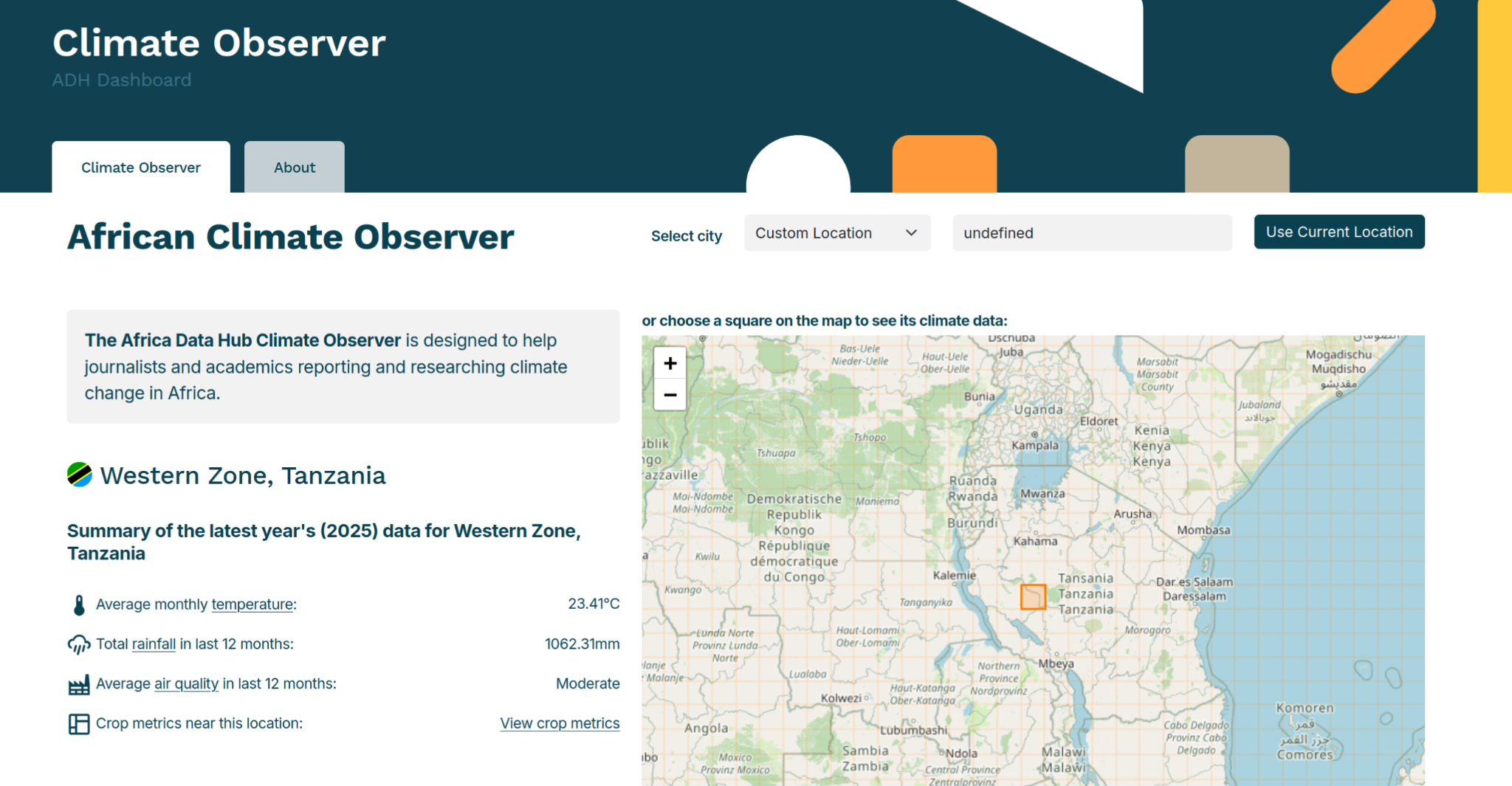
Of all the projects we’ve worked on, though, it’s the African Climate Observer which stands out as the most impactful and continually useful tool we have developed. As the climate crisis continues to progress, and extreme weather and environmental events occur more and more regularly across the continent, there is an ongoing need to empower reporters, researchers and communities with accurate information that can help them and their audiences to understand and act to mitigate its worst effects. From farming to communities living next to water bodies or mine dumps, the impact of unpredictable weather needs to be addressed on the ground.
We started with a simple question: why is it possible to find decades of temperature and rainfall data for cities and regions in the Global North with a single Google search, such as “historical rainfall in New York”, but the same search for African locations will result in tourist information about when to bring an umbrella.
The data exists. Much climate data is collected and distributed at the global level, by government backed agencies such as the European Space Agency, NASA or NOAA. Models for historical data are available from institutions like Berkley Earth. The continent may not have the same level of coverage with base stations monitoring on-the-ground conditions as other parts of the world, but there is plenty of satellite data available, even though some is under threat from Trump administration’s cuts to the US civil service.
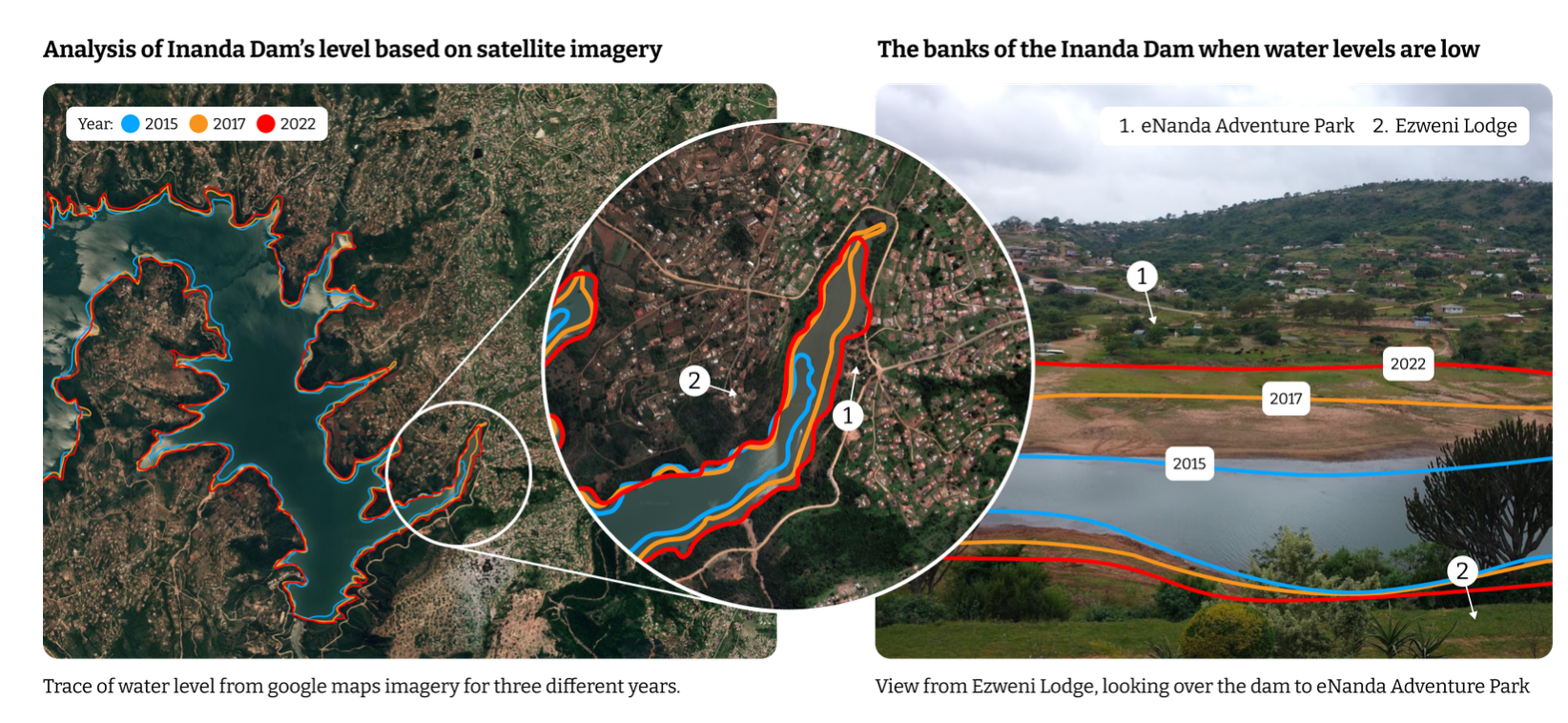
The problem is that this data is hard to interrogate without expert knowledge and sophisticated tools. It is published in large, complex filetypes that combine time series and geographic data, and off-the-shelf visualisations are hard to understand and use effectively in stories.
With the African Climate Observer, we set out to make the latest data (and historical archives) available and usable, for any location on the continent. We aimed to produce simple charts and CSV files that journalists and researchers would be familiar with, and integrate into their workflows. And it has been a success. We have used the African Climate Observer to work with journalists on multiple stories, and we have used it to help hundreds of students and fellows in our work with Global Partnership for Sustainable Development Data to understand the intersection between climate and health data and produce solutions and policy work around the climate crisis.
There are some shortcomings. The more datasets we add, the more complex and intimidating the tool becomes. Automating updates can be challenging, and who wants to work with old data? In order to keep things manageable, data is aggregated across large areas (a 1x1 longitude and latitude grid), which sometimes combines very different observations for air quality or soil moisture into one overly-averaged result.
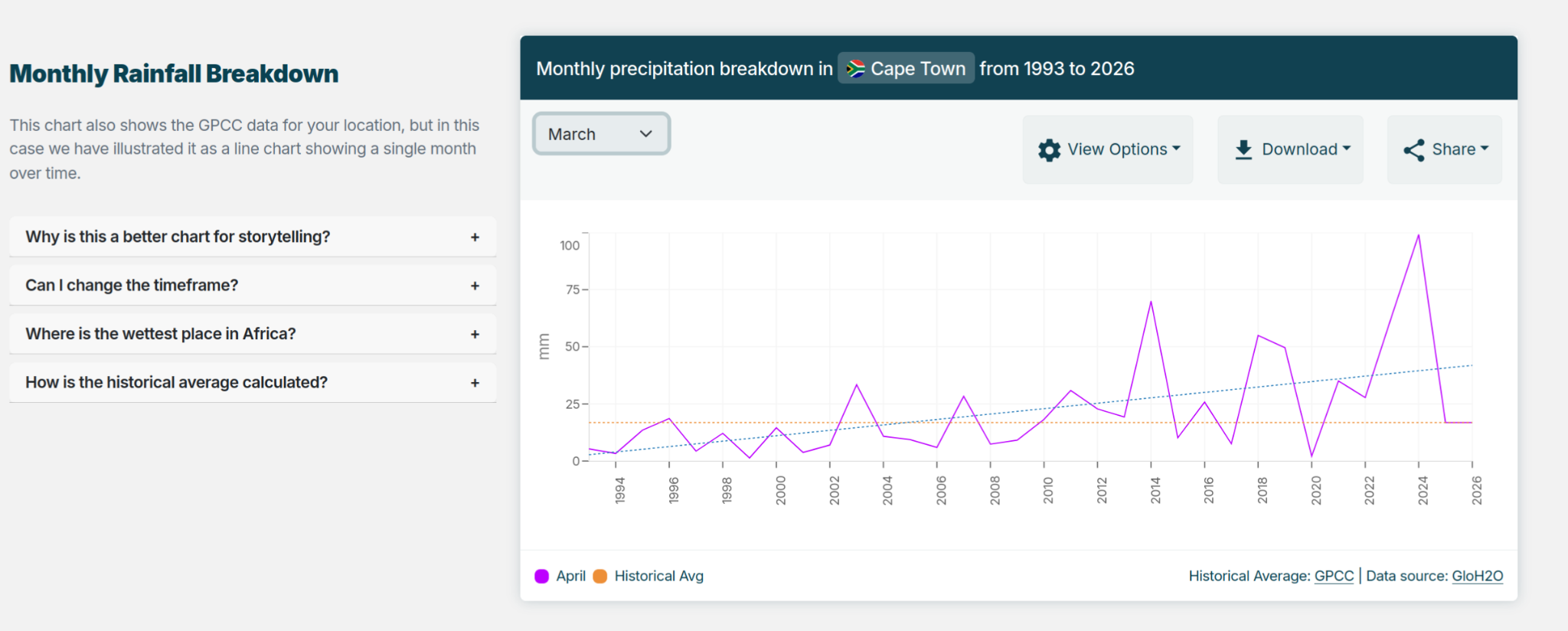
The biggest challenge, though, is visibility of the tool itself. While it remains one of the most used parts of the ADH website, getting it in front of potential users when they need it is hard and, with the advent of AI overviews and “Google Zero”, getting harder.
But the good news is that OpenUp will continue to maintain the African Climate Observer on our own servers. We find it so useful internally and for our partners that we cannot let this project go into maintenance mode. Indeed, we will continue to add additional datasets (the latest look at air quality and crop viability), and would like to extend our work into areas of health data availability that are adjacent to climate concerns.
If you haven’t looked at the African Climate Observer yet, please do check it out here. And if you do use it to help with storytelling, research and understanding, please let us know so we can celebrate your work.
